The History of the eFoil Ban Debate in Hawaii
How community advocacy preserved access to electric hydrofoils
Electric hydrofoils (eFoils)—electric-powered boards that ride above the water on a submerged foil—have grown rapidly in popularity worldwide. In Hawaii, where ocean recreation is deeply embedded in local culture, this emerging technology prompted an active public discussion about safety, noise, and appropriate regulation.
Early Regulation: eFoils Were Already Defined and Managed
Prior to any legislative proposals seeking new restrictions, Hawaii’s Division of Boating and Ocean Recreation (DOBOR) had already clarified how electric hydrofoil surfboards are treated under existing law. According to DOBOR guidance, eFoils are considered motorized vessels that require registration, but they are not classified as thrill craft under Hawaii Revised Statutes.
As registered vessels, eFoils are already subject to operational rules such as slow‑no‑wake zones, shoreline proximity limits, and general boating safety requirements that apply statewide. These existing regulations were designed to balance recreational access with swimmer safety and environmental protection. (dlnr.hawaii.gov)
Noise Concerns Raised in West Maui
Public discussion around eFoils intensified following noise complaints reported in parts of West Maui. In several local news segments, residents described hearing a high‑pitched sound underwater while eFoils were operating nearby. These reports prompted questions about how different propulsion designs may affect acoustic output.
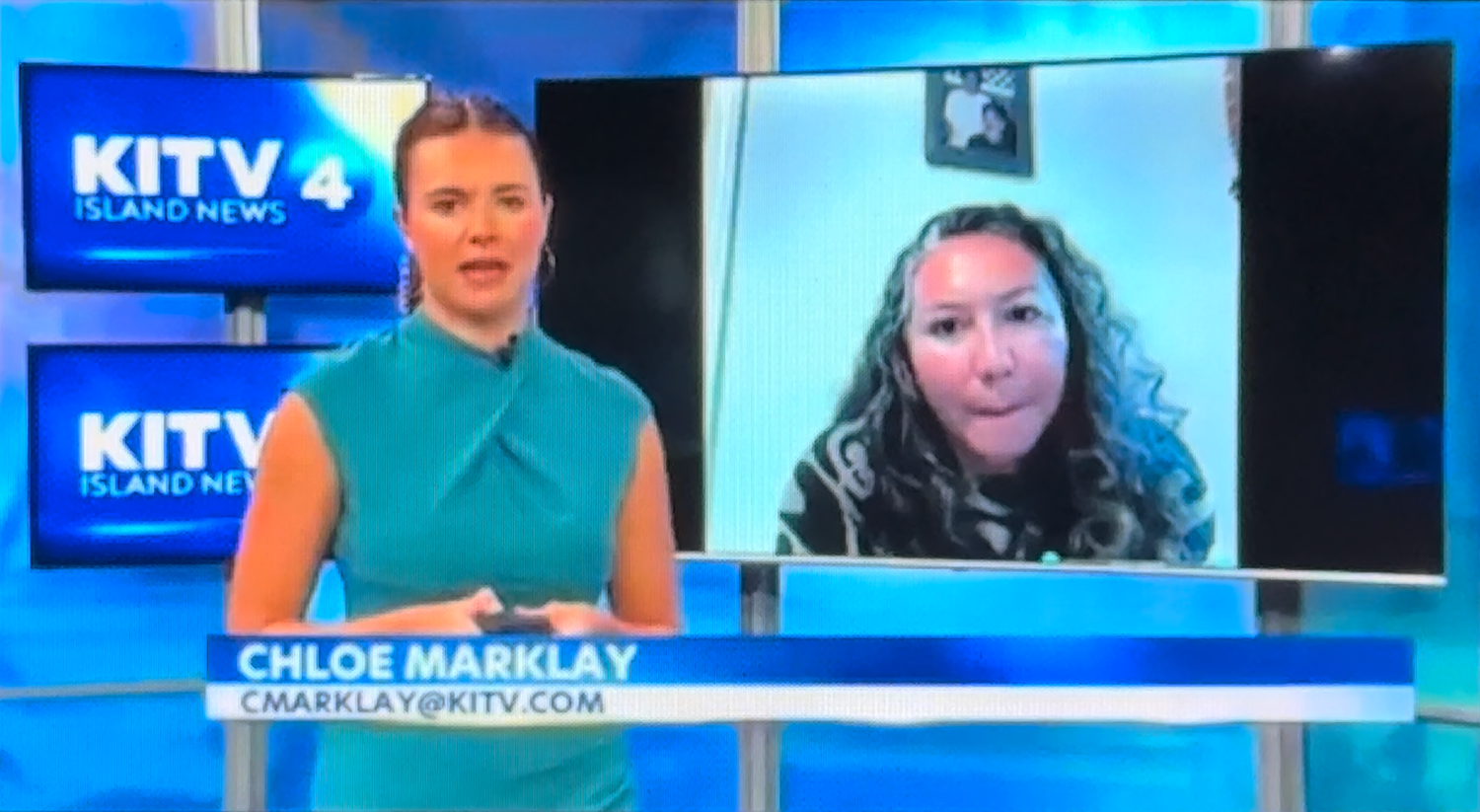
KITV Island News Broadcast February 2024
Some media coverage and community discussions suggested that certain gear‑driven propulsion systems used in some early or specific eFoil models can generate tonal resonance. Gear‑based systems may, under certain operating conditions, produce audible frequencies both underwater and above the surface, whereas direct‑drive propulsion systems—where the electric motor is directly coupled to the propeller—are generally associated with lower mechanical resonance.
It is important to note that these observations were based on anecdotal reports and media discussions rather than formal acoustic studies or regulatory findings.
Public and Lawmaker Concerns
As the discussion evolved, some community members and local officials, including Maui County representatives, raised broader concerns about underwater noise, vessel interactions near shore, and the potential impact of motorized activity on marine life—particularly during whale season in Maui waters.
These concerns were cited as part of the rationale for considering whether existing boating classifications adequately addressed newer forms of electric propulsion, even though no peer‑reviewed studies or agency determinations directly linked eFoil use to harm to whales or other marine species.
Media Coverage and Public Perception
During this period, some news coverage used imagery from earlier hydrofoil‑related incidents involving non‑electric boards. Because these incidents predated the commercial introduction of eFoils, their inclusion in eFoil‑focused reporting contributed to public confusion about safety risks and the differences between electric and non‑electric hydrofoil equipment. (CarveMag 2016)

2022: The First Legislative Proposal (SB627)
The first significant legislative proposal affecting eFoils appeared during the 2022 Regular Session with Senate Bill 627. The bill proposed additional permitting authority for counties and seasonal operational restrictions in certain Maui waters.
SB627 generated discussion but ultimately did not advance into law. While it did not impose new restrictions, it helped frame subsequent policy conversations around electric hydrofoil use. (app.legiplex.com)
While SB627 drew local attention, it did not become law and instead helped set the stage for future legislative discussions.
2023: Maui County Resolution 23‑180
In late 2023, the Maui County Council adopted Resolution 23‑180, recommending that the State Legislature consider updating the statutory definition of thrill craft. The resolution cited general concerns related to increased use of motorized recreational equipment, including noise, congestion, and safety near swimmers. (mauicounty.us)
Early 2024: SB2209 and HB1878 – The “Thrill Craft” Bills
In early 2024, the Hawaii Legislature considered bills aimed at expanding the definition of thrill craft.
SB2209 – Relating to Thrill Craft
Introduced on January 18, 2024, Senate Bill 2209 proposed amending Hawaii Revised Statutes Section 200‑23 so that surfboards using motorized hydrofoil technology (eFoils) would be classified as thrill craft. The bill cited safety and noise concerns, and specifically referenced the potential impact on whales as part of its justification. (data.capitol.hawaii.gov)
SB2209 was scheduled for a public hearing on February 9, 2024, but was ultimately deferred and did not advance out of committee due to overwhelming opposition and lack of broad support. (legiscan.com)
HB1878 – House Companion Bill
House Bill 1878, introduced shortly after SB2209, was a companion proposal to achieve the same definition change. Like SB2209, it sought to classify eFoils as thrill craft, limiting areas of operation. It stalled in committee and did not move forward. (legiscan.com)
Community Mobilization: Formation of the Hawaii eFoil Association
In January 2024, members of Hawaii’s eFoil community formed the Hawaii eFoil Association to provide education, coordinate public outreach, and participate constructively in the legislative process. The association focused on clarifying how eFoils are currently regulated, how they are used in practice, and how existing boating rules already address safety and environmental concerns. (Official Hawaii eFoil Association Website)
Community members submitted written and live testimony opposing the proposed reclassification. Testimony opposing SB2209 and HB1878 significantly exceeded testimony in favor, reflecting widespread concern about the potential impact of broad restrictions on responsible eFoil use.
As a result, both bills failed to advance.

Join the Association: https://www.facebook.com/groups/hawaiiefoilassociation
The result was decisive: the effort to redefine eFoils as thrill craft failed overwhelmingly, with testimony opposing the bills exceeding pro positions by approximately 193 to 1. A record number of voices — including Tom Cooper, Carolyn Burris, David Dickinson, Rebecca Mia, John McCabe, James Dvorak, Ravi Marino, Alika Ferreira , Paul Lowchareonkul — testified in opposition to SB2209 and HB1878.
2025 and 2026: No New Restrictive Bills Filed
Following the 2024 legislative session and the extensive public input provided, no new bills were introduced in 2025 seeking to classify eFoils as thrill craft or impose broad new restrictions. As of 2026, there have likewise been no new legislative proposals aimed at significantly limiting eFoil operation in Hawaii waters.

Noise, Safety, and Existing Rules
Like other motorized vessels, eFoils remain subject to Hawaii’s boating regulations, including speed limits, distance requirements from swimmers and shorelines, and seasonal wildlife protections. Differences in propulsion design—such as direct‑drive versus gear‑driven systems—may influence sound characteristics, but all operators are expected to comply with existing operational rules intended to promote safety and minimize environmental impact.
Looking Ahead
Today, eFoils continue to operate in Hawaii under established boating laws. Responsible use, adherence to regulations, and continued education remain central to maintaining access and ensuring compatibility with other ocean users.
The policy discussions surrounding eFoils in Hawaii illustrate how informed public participation and clear communication can help lawmakers evaluate emerging technologies without imposing unnecessary restrictions.
Stay Involved
For updates on eFoil policy, safety standards, and community initiatives in Hawaii, visit the Official Hawaii eFoil Association: hawaiiefoil.org
Join the community discussion on Facebook: Hawaii eFoil Association Group
Sources
- Hawaii Senate Bill SB2209 (2024) and HB1878 (data.capitol.hawaii.gov)
- Maui County Resolution 23‑180 (mauicounty.us)
- Hawaii eFoil Association mission (hawaiiefoil.org)
- Hawaii eFoil Association Facebook Group (facebook.com/groups/hawaiiefoilassociation)
- DOBOR guidance on eFoils (dlnr.hawaii.gov)
- KITV4 Hawaii news segment, Tamara Paltin, 0:44 timestamp for high-pitched noise complaint
- CarveMag: Jamie Mitchell issues foil board warning, 2016 (carvemag.com)